Cotidiano de uma brasileira em Paris, comentarios sobre cultura, politica e besteiras em geral. Entre le faible et le fort c'est la liberté qui opprime et la loi qui libère." Jean-Jacques Rousseau

Saturday, April 14, 2012

On Parole


 Oxford English Dictionary © 2008 Oxford University Press:

parole/pəˈrəʊl/ 

noun

  • 1 the temporary or permanent release of a prisoner before the expiry of a sentence, on the promise of good behaviour.
  • 2 historical a prisoner of war's word of honour to return to custody or act as a non-belligerent if released.
  • 3 Linguistics the actual language used by people. Contrasted with langue.

The private and the public spheres intersect all the time, everyday, and often it's a seamless movement; often, nothing much is stirred, uncovered.


The understanding which seems to accompany the system that is language has built into it the clues which signal to all that a statement needs modifying before it can be made public, or that it needs modifying before it can be absorbed in informal exchanges.


But the once fluid division between the public and the private is becoming more rigid, less flexible, clearer even as it confuses (me anyway!).
Because why else would any of us integrate into our daily exchanges disclaimers of all types?


Language is one system.  When it is used by individuals it temporarily becomes a function of that individual's thoughts, opinions and feelings, while at the same time remaining an abstract monster which exists in spite of any one speaker's will or influence.  It is very much like Frankenstein's monster.  Created but, once unleashed, no longer dependent on its creator.


At the same time, individuals modify, add, subtract, mix, superimpose meanings, images, sounds, and paralanguage to improve or impoverish language, every time they use it.


What interests me is the tragic development I see all around, whether in written or spoken language. I see people - individuals and groups - forgetting that when they speak, they have the power to influence listeners AND language; that when they speak, they do not have to integrate any of the vices, habits, clichés, opinions, metaphors and similes already dancing around the collective atmosphere.  Every engagement with language is a chance we all have to express our own thoughts and feelings according to how we see the world, instead of adopting someone else's views wholesale.


Our current obsession with choice is an amusing thing.  While adamant we do not want only one or two possible alternatives when it comes to food, politics, and a number of other things, we seem to be unaware that is exactly what we are getting.  The existence of different brands of the same exact product does not mean we can choose between or among different objects.  
The best example I can think of right now is news channels.  MSNBBCNN.  This Friday I watched the news on TV for a while, after a moratorium I imposed on myself since March 2010.  CNN, BBC News, Sky, Al Jazeera, France 24...  At the same time in the evening, this Friday, ALL these channels were telling me the exact same thing.  All of them.  They all start their "financial news" at the same time.  It is almost as if the directors of each channel phoned one another and said "ok... ready?  NOW!" and had their people press PLAY on the same stories.  And how varied, creative, at least authentic! do you think each channel's report was with regards to the words they used in the story?  They're in more perfect unison than the choir in my local church.


Is this choice?


This happens with language and when it does, it is even worse, because more insidious. The irony is this silent threat is loud.
Speak with 12 people and ask them all the same question. See how many give the same answer.
Speak with 12 people and see how many use the same expressions, turns of phrases, metaphors, similes, etc, to express their opinion.  See how many differ in terms of their opinions on the same issue.
Speak with these 12 people and, at the end, see how many of the expressions they used to convey their wildly differing opinions can be traced to MSNBBCNN.


Recently, talking to someone close to me, I broached this topic, and she said it is because there are a lot of not v bright people in the world.  Maybe.  I'm even willing to agree with that.  But, I asked here, wouldn't that translate into, say, 12 or at least 10 DIFFERENT stupid opinions?  How come the stupidity is so uniform?  Why is the putative stupidity being expressed in the same ways?  Surely there isn't a Stupid Club, like the Trekkies have, whereby ppl get together to exchange views on whatever, and come up with a small collection of things to say?  The "government line" of stupidity?  


But not even governments can keep their cabinet members from stepping into piles of sophistry designed by journalists who work for papers which exist thanks to advertisement from companies whose interests go against the people, sovereignty, and democracy.  


Manufacturing Consent (MC) shows this.  I know I am not discovering anything new.  What I find is that the processes outlined and examined in MC are spreading to private exchanges, to informal conversations.  The property language has of becoming a flexible tool to anyone who uses it is eroding, and no one has to make an effort to make it so.  It is just happening because too many people's mental inertia is allowing it.


The public use of language is invading our private exchanges and not being renewed by individuals' linguistic creativity, or at least not at the same rate.  Like eroded soil, linguistic rain is no longer penetrating the atmosphere, and condensation is more and more a concentrated version of a compact formula of pollutant elements designed to incite apathy and ostensible transparency.  No! Not even. Transparency is NOT a positive thing.  Seeing THROUGH something is not seeing the something itself.  I sit corrected and, after having thought it through, hereby declare those clouds to be of ostensible opacity.


Fratelli, let's think, please.  


Yknow how in churches the pastor, priest, preacher, will say, "brothers and sisters, let us pray" ?


Please, let us think.


You know it is the same thing, but saying THINK instead of PRAY changes something, does it not?


Why does it change something?


According to me, it is because we think for ourselves, but pray outwardly.  Thought is introspection, as good prayer ought to be, and often isn't.


Let us use language to fit our real thoughts.
Like the economy and economic theory, language exists and was created by us, to suit our needs, both to communicate and create.  Like the economy, it needs to fit our lives and benefit us, not the other way around.  We should not modify our thoughts merely to fit around the economy and the language being imposed on us.
Language, like the economy, does not belong to pressure groups, political parties, or academics. Like Castro Alves said "the public square is the people's, as the sky is the condor's". Language is the biggest public square. Let's not let malls own it like they do so much of the literal public square now, too much.


Let us let language fit our need to create.
We do not have to use the expressions ppl on telly use.  NO ONE has the monopoly on language. It belongs to all of us, and we can ALL of us use it how we want to use it.  


I want to put Langue, according to Def #3 at the beginning of this entry, ON PAROLE, and free Parole from the outdoors prison in which it currently floats.  Seriously.  And I'm not talking about JamesJoyce Syndrome.


This is so important because language shapes thought.  Try to think without words. Can you?
I haven't read it but like the cover

Friday, April 13, 2012

Candy in my Ears


mondegreen is the mishearing or misinterpretation of a phrase as a result of near homophony, in a way that gives it a new meaning. It most commonly is applied to a line in a poem or a lyric in a song. American writer Sylvia Wright coined the term in her essay "The Death of Lady Mondegreen," published in Harper's Magazine in November 1954. "Mondegreen" was included in the 2000 edition of the Random House Webster's College DictionaryMerriam-Webster's Collegiate Dictionary added the word in 2008. The phenomenon is not limited to English, with examples cited by Fyodor Dostoyevsky, in the Hebrew song Háva Nagíla ("Let's Be Happy"), and in Bollywood movies.
A closely related category is the soramimi, which are songs that produce different meanings from those originally intended when interpreted in another language.
The unintentionally incorrect use of similar-sounding words or phrases in speaking is a malapropism. If there is a connection in meaning, it can be called an eggcorn. If a person stubbornly sticks to a mispronunciation after being corrected, that can be described as mumpsimus. (Wikipedia)

Sunday, April 8, 2012

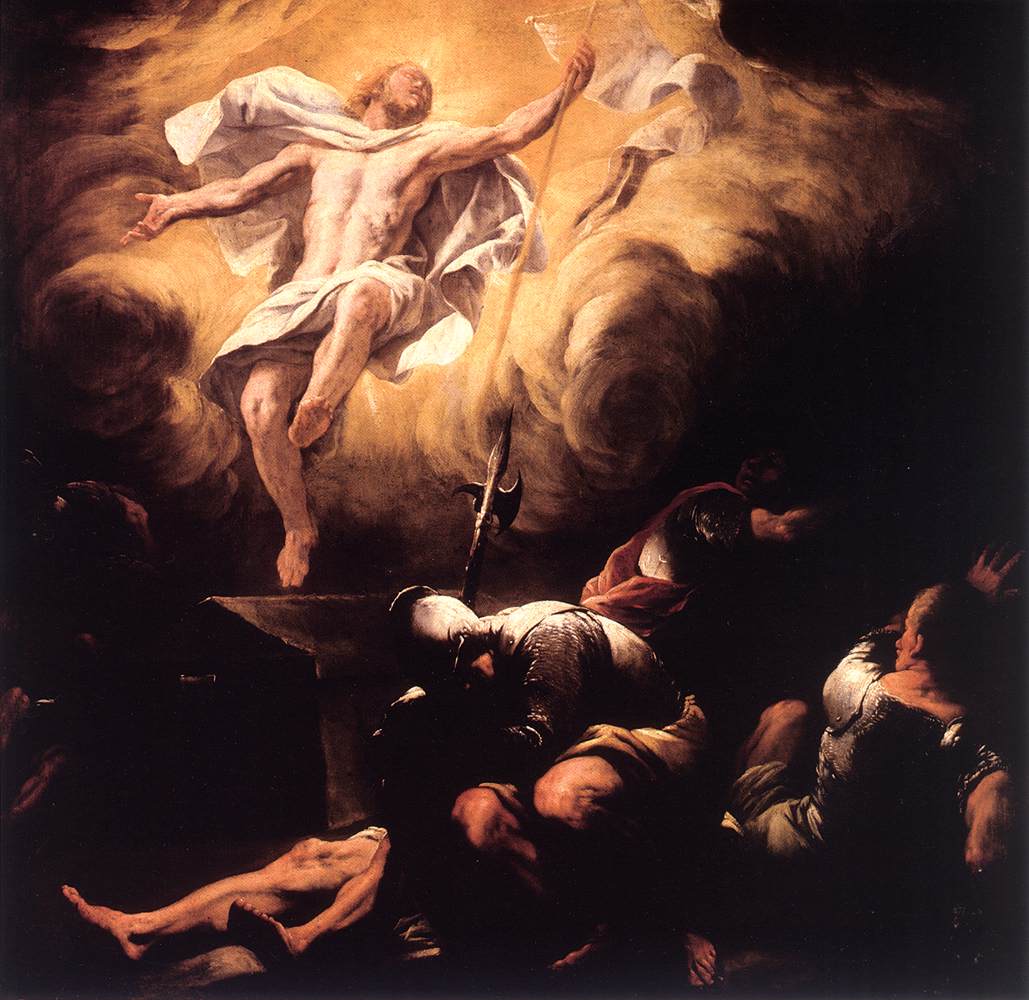
Antiphon Phor

Regìna cæli, lætare, alleluia:
Quia quem meruìsti portare, alleluia:
Ressuréxit, sicut dixit, alleluia:
Ora pro nobis Deum, alleluia.

Luca Giordano, Resurrection, after 1665

Friday, April 6, 2012

Monday, April 2, 2012

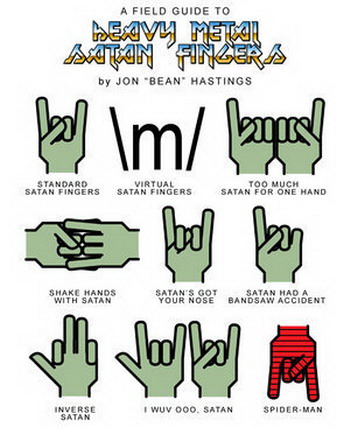
Holy Week, Batman! It's Mad Hare Krishna!


To be as "mad as a March hare" is an English idiomatic phrase derived from the observed antics, said to occur (some say incorrectly) only in the March breeding season of the Haregenus Lepus. The phrase is an allusion that can be used to refer to any other animal or human who behaves in the excitable and unpredictable manner of a "March hare".


Although the phrase in general has been in continuous use since the 16th century, it was popularised in more recent times by Lewis Carroll in his book Alice's Adventures in Wonderland, which has the March Hare as one of its main characters.


"The March Hare will be much the most interesting, and perhaps as this is May it won't be raving mad -- at least not so mad as it was in March." 

Wednesday, March 28, 2012

Monday, March 26, 2012

Parenthetical Inversion

René Magritte, Mermaid, 1935

Man Ray, Pisces, 1938

Max Ernst, Le jardin de la France, 1962

Saturday, March 24, 2012

René Magritte, Les merveilles de la nature, 1953


"In der Beschränkung zeigt sich erst der Meister…"

"It is in working within limits that the master reveals himself…"

Goethe

Natur und Kunst

Friday, March 23, 2012

In & Out


The Decay of Lying
Oscar Wilde
1905

A DIALOGUE. 
Persons: Cyril and Vivian. 
Scene: the library of a country house in Nottinghamshire.

CYRIL (coming in through the open window from the terrace). My dear Vivian, don't coop yourself up all day in the library. It is a perfectly lovely afternoon. The air is exquisite. There is a mist upon the woods like the purple bloom upon a plum. Let us go and lie on the grass, and smoke cigarettes, and enjoy Nature.

VIVIAN. Enjoy Nature! I am glad to say that I have entirely lost that faculty. People tell us that Art makes us love Nature more than we loved her before; that it reveals her secrets to us; and that after a careful study of Corot and Constable we see things in her that had escaped our observation. My own experience is that the more we study Art, the less we care for Mature. What Art really reveals to us is Nature's lack of design, her curious crudities, her extraordinary monotony, her absolutely unfinished condition. Nature has good intentions, of course, but, as Aristotle once said, she cannot carry them out. When I look at a landscape I cannot help seeing all its defects. It is fortunate for us, however, that Nature is so imperfect, as otherwise we should have had no art at all. Art is our spirited protest, our gallant attempt to teach Nature her proper place. As for the infinite variety of Nature, that is a pure myth. It is not to be found in Nature herself. It resides in the imagination, or fancy, or cultivated blindness of the man who looks at her.

CYRIL. Well, you need not look at the landscape. You can lie on the grass and smoke and talk.

VIVIAN. But Nature is so uncomfortable. Grass is hard and dumpy and damp, and full of dreadful black insects. Why, even Morris' poorest workman could make you a more comfortable seat than the whole of Nature can. Nature pales before the furniture of "the street which from Oxford has borrowed its name," as the poet you love so much once vilely phrased it. I don't complain. If Nature had been comfortable, mankind would never have invented architecture, and I prefer houses to the open air. In a house we all feel of the proper proportions. Everything is subordinated to us, fashioned for our use and our pleasure. Egotism itself, which is so necessary to a proper sense of human dignity' is entirely the result of indoor life. Out of doors one becomes abstract and impersonal. One's individuality absolutely leaves one. (...)

Max Ernst, Day and Night, 1941
This makes me laugh and think; the text makes me laugh, the painting makes me think.  Neither "Nature" nor "comfortable indoors" can exist without each other...  

Monday, March 19, 2012

Wislawa Szymborska

Thoughts That Visit Me on Busy Streets


Faces.
Billions of faces on the earth's surface.
Each different, so we're told,
from those that have been and will be.
But Nature—since who really understands her?—
may grow tired of her ceaseless labors
and so repeats earlier ideas
by supplying us
with preworn faces.

Those passersby might be Archimedes in jeans,
Catherine the Great draped in resale,
some pharaoh with briefcase and glasses.


Billions of faces on the earth's surface.
My face, yours, whose—
you'll never know.
Maybe Nature has to shortchange us,
and to keep up, meet demand,
she fishes up what's been sunk
in the mirror of oblivion.


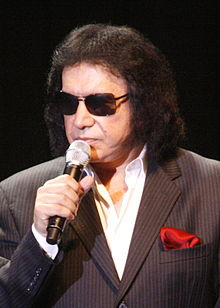
Qaddafi
Gene Simmons


Holland Taylor

Jane Fonda


Sunday, March 18, 2012

Saturday, March 17, 2012

Homo sum: humani nil a me alienum puto


Waterhouse, The Lady of Shalott, 1894


Friday, March 16, 2012

Reddy Set


The unbounded warmth of red has not the irresponsible appeal of
yellow, but rings inwardly with a determined and powerful
intensity. It glows in itself, maturely, and does not distribute
its vigour aimlessly.

The varied powers of red are very striking. By a skillful use of
it in its different shades, its fundamental tone may be made warm
or cold.

[Footnote: Of course every colour can be to some extent varied
between warm and cold, but no colour has so extensive a scale of
varieties as red.]

Light warm red has a certain similarity to medium yellow, alike
in texture and appeal, and gives a feeling of strength, vigour,
determination, triumph. In music, it is a sound of trumpets,
strong, harsh, and ringing.

Vermilion is a red with a feeling of sharpness, like glowing
steel which can be cooled by water. Vermilion is quenched by
blue, for it can support no mixture with a cold colour. More
accurately speaking, such a mixture produces what is called a
dirty colour, scorned by painters of today. But "dirt" as a
material object has its own inner appeal, and therefore to avoid
it in painting is as unjust and narrow as was the cry of
yesterday for pure colour. At the call of the inner need that
which is outwardly foul may be inwardly pure, and vice versa.

The two shades of red just discussed are similar to yellow,
except that they reach out less to the spectator. The glow of red
is within itself. For this reason it is a colour more beloved
than yellow, being frequently used in primitive and traditional
decoration, and also in peasant costumes, because in the open air
the harmony of red and green is very beautiful. Taken by itself
this red is material, and, like yellow, has no very deep appeal.
Only when combined with something nobler does it acquire this
deep appeal. It is dangerous to seek to deepen red by an
admixture of black, for black quenches the glow, or at least
reduces it considerably.

But there remains brown, unemotional, disinclined for movement.
An intermixture of red is outwardly barely audible, but there
rings out a powerful inner harmony. Skillful blending can produce
an inner appeal of extraordinary, indescribable beauty. The
vermilion now rings like a great trumpet, or thunders like a
drum.

Cool red (madder) like any other fundamentally cold colour, can
be deepened--especially by an intermixture of azure. The
character of the colour changes; the inward glow increases, the
active element gradually disappears. But this active element is
never so wholly absent as in deep green. There always remains a
hint of renewed vigour, somewhere out of sight, waiting for a
certain moment to burst forth afresh. In this lies the great
difference between a deepened red and a deepened blue, because in
red there is always a trace of the material. A parallel in music
are the sad, middle tones of a cello. A cold, light red contains
a very distinct bodily or material element, but it is always
pure, like the fresh beauty of the face of a young girl. The
singing notes of a violin express this exactly in music.

Warm red, intensified by a suitable yellow, is orange. This blend
brings red almost to the point of spreading out towards the
spectator. But the element of red is always sufficiently strong
to keep the colour from flippancy. Orange is like a man,
convinced of his own powers. Its note is that of the angelus, or
of an old violin.

Just as orange is red brought nearer to humanity by yellow, so
violet is red withdrawn from humanity by blue. But the red in
violet must be cold, for the spiritual need does not allow of a
mixture of warm red with cold blue.

Violet is therefore both in the physical and spiritual sense a
cooled red. It is consequently rather sad and ailing. It is worn
by old women, and in China as a sign of mourning. In music it is
an English horn, or the deep notes of wood instruments (e.g. a
bassoon).

[Footnote: Among artists one often hears the question, "How are
you?" answered gloomily by the words "Feeling very violet."]

The two last mentioned colours (orange and violet) are the fourth
and last pair of antitheses of the primitive colours. They stand
to each other in the same relation as the third antitheses--green
and red--i.e., as complementary colours.

As in a great circle, a serpent biting its own tail (the symbol
of eternity, of something without end) the six colours appear
that make up the three main antitheses. And to right and left
stand the two great possibilities of silence--death and birth.

Plutchik's Wheel of Emotions


It is clear that all I have said of these simple colours is very
provisional and general, and so also are those feelings (joy,
grief, etc.) which have been quoted as parallels of the colours.
For these feelings are only the material expressions of the soul.
Shades of colour, like those of sound, are of a much finer
texture and awake in the soul emotions too fine to be expressed
in words. Certainly each tone will find some probable expression
in words, but it will always be incomplete, and that part which
the word fails to express will not be unimportant but rather the
very kernel of its existence. For this reason words are, and will
always remain, only hints, mere suggestions of colours. In this
impossibility of expressing colour in words with the consequent
need for some other mode of expression lies the opportunity of
the art of the future. In this art among innumerable rich and
varied combinations there is one which is founded on firm fact,
and that is as follows. The actual expression of colour can be
achieved simultaneously by several forms of art, each art playing
its separate part, and producing a whole which exceeds in
richness and force any expression attainable by one art alone.
The immense possibilities of depth and strength to be gained by
combination or by discord between the various arts can be easily
realized.  

Concerning the Spiritual in Art by Wassily Kandinsky

pp. 40-3

Tuesday, March 13, 2012


Concerning the Spiritual in Art

Wassily Kandinsky

Black and white have already been discussed in general terms. More particularly speaking, white, 
although often considered as no colour (a theory largely due to the Impressionists, who saw no white 
in nature as a symbol of a world from which all colour as a definite attribute has disappeared).

This world is too far above us for its harmony to touch our souls. A great silence, like an impenetrable wall, shrouds its life from our understanding. White, therefore, has this harmony of silence, 
which works upon us negatively, like many pauses in music that break temporarily the melody. It is not a dead silence, but one pregnant with possibilities. White has the appeal of the nothingness that is 
before birth, of the world in the ice age.

A totally dead silence, on the other hand, a silence with no possibilities, 
has the inner harmony of black. In music it is represented by one of those profound and final pauses, 
after which any continuation of the melody seems the dawn of another world. Black is something burnt out, like the ashes of a funeral pyre, something motionless like a corpse. 
The silence of black is the silence of death. Outwardly black is the colour with least harmony of all, 
a kind of neutral background against which the minutest shades of other colours stand clearly forward.
It differs from white in this also, for with white nearly every colour is in discord, or even mute 
altogether.
[Footnote: E.g. vermilion rings dull and muddy against white, but against black with clear strength. Light yellow against white is weak, against black pure and brilliant.]

Not without reason is white taken as symbolizing joy and spotless purity, and black grief and death. 
A blend of black and white produces gray which, as has been said, is silent and motionless, 
being composed of two inactive colours, its restfulness having none of the potential activity of green.

A similar gray is produced by a mixture of green and red, a spiritual blend of passivity and glowing warmth.
[Footnote: Gray = immobility and rest. Delacroix sought to express rest by a mixture of green and red (cf. Signac, sup. cit.).]
Delacroix, Mademoiselle Rose, 1817-1824

Sunday, March 11, 2012

Antonymous Hemiotics

Curious, no?  I love how this easily shows linguistic contrast, a conflict between semantics and semiotics. 
Words which would naturally fall under the heading of negative evaluative stance suddenly see their semantic prosody shift!

"Wicked" is another example. "Sick", "bad", "phat" (this one at least saw an accompanying formal modification too).  I'm wondering now about the possible reasons behind this linguistic epiphenomenon.

Could hyperbole be at the center?  We're so used to saying something is great instead of good, excellent instead of acceptable, brilliant instead of OK, etc, that when we need a strong word with positive evaluative stance we find ourselves at a loss.  It seems we then look for words which have heretofore been used negatively and subvert their agreed upon semantic value without even having to explain the movement, no need to allude to the metalinguistic reasons! It seems to be universally understood in an instant, and perhaps even the possible reason(s?) is (are?) (an) Unknown Known(s) in our minds.

I'd like to compile a list of such examples, and investigate the factors which cause these shifts.  But I'm awful at writing lists.  Or am I awesome at it?  

Friday, March 9, 2012

Yes We Kandinsky
Concerning the Spiritual in Art
Kandinsky, Painting with red spot, 1914
The spirit, like the body, can be strengthened and developed by
frequent exercise. 
...
The starting point is the study of colour and its effects on men.

There is no need to engage in the finer shades of complicated
colour, but rather at first to consider only the direct use of
simple colours.
...
Two great divisions of colour occur to the mind at the outset:
into warm and cold, and into light and dark. To each colour there
are therefore four shades of appeal--warm and light or warm and
dark, or cold and light or cold and dark.

Generally speaking, warmth or cold in a colour means an approach
respectively to yellow or to blue. This distinction is, so to
speak, on one basis, the colour having a constant fundamental
appeal, but assuming either a more material or more non-material
quality. The movement is an horizontal one, the warm colours
approaching the spectator, the cold ones retreating from him.

The colours, which cause in another colour this horizontal
movement, while they are themselves affected by it, have another
movement of their own, which acts with a violent separative
force. This is, therefore, the first antithesis in the inner
appeal, and the inclination of the colour to yellow or to blue,
is of tremendous importance.

The second antithesis is between white and black; i.e., the
inclination to light or dark caused by the pair of colours just
mentioned. These colours have once more their peculiar movement
to and from the spectator, but in a more rigid form.
...
Yellow and blue have another movement which affects the first
antithesis--an ex- and concentric movement. If two circles are
drawn and painted respectively yellow and blue, brief
concentration will reveal in the yellow a spreading movement out
from the centre, and a noticeable approach to the spectator. The
blue, on the other hand, moves in upon itself, like a snail
retreating into its shell, and draws away from the spectator.
[Footnote: These statements have no scientific basis, but are
founded purely on spiritual experience.]

In the case of light and dark colours the movement is emphasized.
That of the yellow increases with an admixture of white, i.e., as
it becomes lighter. That of the blue increases with an admixture
of black, i.e., as it becomes darker. This means that there can
never be a dark-coloured yellow. The relationship between white
and yellow is as close as between black and blue, for blue can be
so dark as to border on black. Besides this physical
relationship, is also a spiritual one (between yellow and white
on one side, between blue and black on the other) which marks a
strong separation between the two pairs.

An attempt to make yellow colder produces a green tint and checks
both the horizontal and excentric movement. The colour becomes
sickly and unreal. The blue by its contrary movement acts as a
brake on the yellow, and is hindered in its own movement, till
the two together become stationary, and the result is green.
Similarly a mixture of black and white produces gray, which is
motionless and spiritually very similar to green.

But while green, yellow, and blue are potentially active, though
temporarily paralysed, in gray there is no possibility of
movement, because gray consists of two colours that have no
active force, for they stand, the one in motionless discord, the
other in a motionless negation, even of discord, like an endless
wall or a bottomless pit.

Because the component colours of green are active and have a
movement of their own, it is possible, on the basis of this
movement, to reckon their spiritual appeal.

The first movement of yellow, that of approach to the spectator
(which can be increased by an intensification of the yellow), and
also the second movement, that of over-spreading the boundaries,
have a material parallel in the human energy which assails every
obstacle blindly, and bursts forth aimlessly in every direction.

Yellow, if steadily gazed at in any geometrical form, has a
disturbing influence, and reveals in the colour an insistent,
aggressive character. [Footnote: It is worth noting that the
sour-tasting lemon and shrill-singing canary are both yellow.]
The intensification of the yellow increases the painful
shrillness of its note.

[Footnote: Any parallel between colour and music can only be
relative. Just as a violin can give various shades of tone,--so
yellow has shades, which can be expressed by various instruments.
But in making such parallels, I am assuming in each case a pure
tone of colour or sound, unvaried by vibration or dampers, etc.]
Yellow is the typically earthly colour. It can never have profound meaning. An intermixture of blue makes it a sickly colour. It may be paralleled in human nature, with madness, not with melancholy or hypochondriacal mania, but rather with violent raving lunacy. The power of profound meaning is found in blue, and first in its physical movements (1) of retreat from the spectator, (2) of turning in upon its own centre. The inclination of blue to depth is so strong that its inner appeal is stronger when its shade is deeper.

Blue is the typical heavenly colour.

[Footnote: ...The halos are golden for emperors and prophets
(i.e. for mortals), and sky-blue for symbolic figures (i.e.
spiritual beings); (Kondakoff, Histoire de l'An Byzantine
consideree principalement dans les miniatures, vol. ii, p. 382,
Paris, 1886-91).]

The ultimate feeling it creates is one of rest.

[Footnote: Supernatural rest, not the earthly contentment of
green. The way to the supernatural lies through the natural. And
we mortals passing from the earthly yellow to the heavenly blue
must pass through green.]

When it sinks almost to black, it echoes a grief that is hardly
human.

[Footnote: As an echo of grief violet stand to blue as does green
in its production of rest.]

When it rises towards white, a movement little suited to it, its
appeal to men grows weaker and more distant. In music a light
blue is like a flute, a darker blue a cello; a still darker a
thunderous double bass; and the darkest blue of all-an organ.

A well-balanced mixture of blue and yellow produces green. The
horizontal movement ceases; likewise that from and towards the
centre. The effect on the soul through the eye is therefore
motionless. This is a fact recognized not only by opticians but
by the world. Green is the most restful colour that exists. On
exhausted men this restfulness has a beneficial effect, but after
a time it becomes wearisome. Pictures painted in shades of green
are passive and tend to be wearisome; this contrasts with the
active warmth of yellow or the active coolness of blue. In the
hierarchy of colours green is the "bourgeoisie"-self-satisfied,
immovable, narrow. It is the colour of summer, the period when
nature is resting from the storms of winter and the productive
energy of spring.

Any preponderance in green of yellow or blue introduces a
corresponding activity and changes the inner appeal. The green
keeps its characteristic equanimity and restfulness, the former
increasing with the inclination to lightness, the latter with the
inclination to depth. In music the absolute green is represented
by the placid, middle notes of a violin.
...
pp. 36-9

Thursday, March 8, 2012

Cyclamen hederifolium

Cyclamen hederifolium is a tuberous perennial that blooms and sprouts leaves in autumn, grows through the winter, and goes dormant before summer, when the seed pods ripen and open.

Monday, March 5, 2012

Dainty Boat

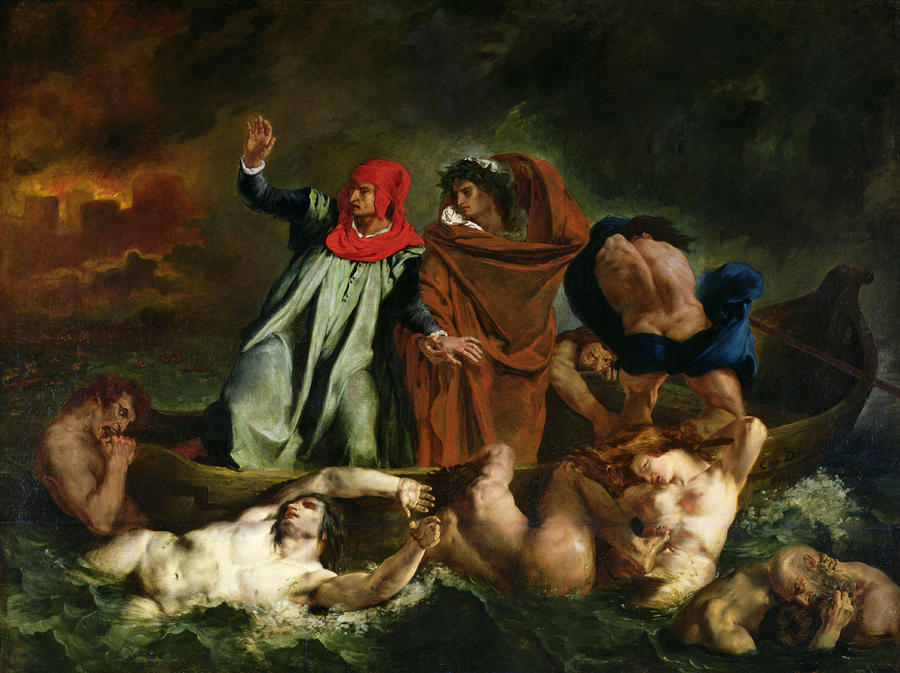
Delacroix, La barque de Dante, 1822


Cézanne, La barque de Dante (after Delacroix), 1870